

Preview for Kara’s review. Educational draft · clinical approval pending.
PCOS (polycystic ovary syndrome) is one of the most common hormonal conditions in women. It is also one of the most misunderstood, starting with its name. In 2026, an international group of experts and patient organisations renamed it polyendocrine metabolic ovarian syndrome (PMOS). The new name reflects that the condition affects hormones and metabolism, not just the ovaries, and that the ovaries don’t actually contain harmful cysts. You’ll still hear “PCOS” for a while, as the change is being introduced gradually.
PCOS isn’t really about “cysts”. The small structures seen on ultrasound are usually follicles that haven’t progressed to ovulation. What matters for fertility is often how regularly ovulation happens.
How PCOS is assessed

In adults, after other causes have been excluded, the 2023 international guideline diagnoses PCOS when two of these three features are present: irregular or absent ovulation; signs of higher androgen (“male-type”) hormones, on symptoms or blood tests; and a polycystic ovarian appearance on ultrasound or a raised AMH. So not every woman with PCOS has all three.
PCOS and fertility
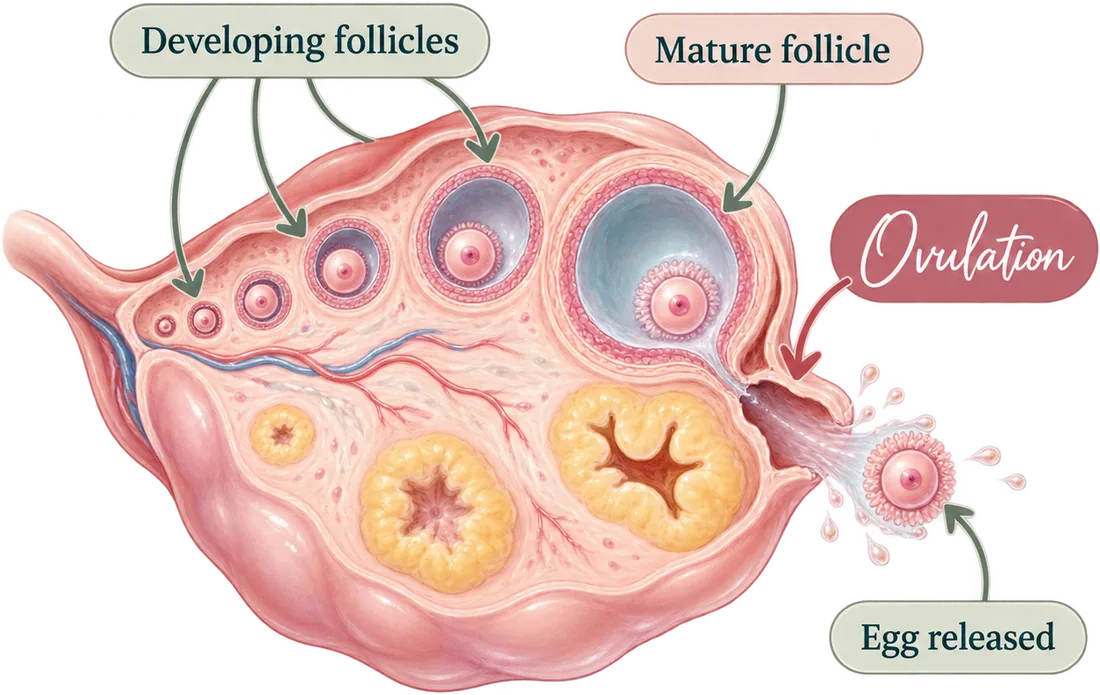
PCOS is the most common cause of irregular or absent ovulation, which can make conceiving take longer. It is very treatable. For women who aren’t ovulating, letrozole is now the medicine usually offered first: in a large trial it led to more live births than clomifene (also spelt clomiphene). In South Africa letrozole is registered for breast cancer, so using it for fertility is “off-label”; your doctor can explain what that means for you. Your doctor will advise what suits you.
More than fertility

PCOS can affect metabolic and emotional health too. Management is individual, and a healthcare professional can help decide what applies to you.
Myth vs evidence
“PCOS means you can’t get pregnant.”
PCOS can make ovulation less predictable, but it does not mean pregnancy is impossible. Individual circumstances differ.
“If you have cysts on your ovaries, you have PCOS.”
An ultrasound appearance alone isn’t a diagnosis. Assessment looks at a combination of features.
- Which features of PCOS apply to me, and how was that assessed?
- How can we tell whether I’m ovulating?
- Are there other health checks I should have because of PCOS?
Words you may hear
- Androgens
- A group of hormones, including testosterone, present in both women and men at different levels.
- Anovulation
- A cycle in which ovulation does not happen.
- Polycystic ovarian morphology
- An ultrasound appearance with many small follicles.
PCOS is a spectrum. Understanding which features apply to you leads to far better conversations than the label alone.
Watch with Kara
Videos on this topic are coming to the channel:
- PCOS and Fertility Explained
- What Does PCOS Actually Mean?
Want the foundations in one place? The free Fertility Starter Guide covers ten things everyone should understand about their fertility.
Sources 3 studies and guidelines Show the research
- Teede et al. (2023). Recommendations from the 2023 international evidence-based guideline for PCOS. Fertility and Sterility.
- Teede et al. (2026). Polyendocrine metabolic ovarian syndrome, the new name for polycystic ovary syndrome. The Lancet.
- Legro et al. (2014). Letrozole versus clomiphene for infertility in the polycystic ovary syndrome. New England Journal of Medicine.