

Preview for Kara’s review. Educational draft · clinical approval pending.
Fertility supplements are a big market, and the claims on the label often go beyond the evidence. Folic acid is essential before pregnancy. Some other supplements have improved egg, sperm or embryo quality measures in trials for particular groups, although trials have not yet consistently shown more live births.
In my laboratory experience, supplements definitely make a difference: introducing them in my laboratory improved embryo quality. I think of them as premium ingredients in a recipe. They can improve the quality of the ingredients, the eggs and sperm, and can affect other factors that help the process succeed, but in my experience they don’t change sperm shape (morphology). They support treatment; they don’t replace it.
At a glance
What trials show, and for whom. The detail is in the sections below.

Folic acid
Every woman trying to conceive
Lowers the risk of neural-tube defects such as spina bifida.
Essential
CoQ10
Young women with a low egg reserve, before IVF
More eggs and more good-quality embryos in a randomised trial.
Births not yet shown
Inositol
Women with PCOS (PMOS)
May improve some metabolic measures; one form may help ovulation.
Limited evidence
Vitamin D
Women who are low in vitamin D
Correcting a deficiency is sensible for your general health.
Births not yet shown
DHEA
Women with a low ovarian reserve
Randomised trials have not shown more live births.
Specialist advice only
Antioxidant combinations
Men with abnormal semen results
Small gains in sperm count or movement; three large trials found no more babies.
No more births in large trialsFolic acid: essential before pregnancy

Taking a daily folic acid supplement before conception and in early pregnancy greatly lowers the risk of neural-tube defects such as spina bifida. In South Africa, national guidelines recommend folic acid 5 mg a day, starting at least one month before you try to conceive and continuing through the first 12 weeks of pregnancy. Some women are advised to take it for the whole pregnancy, for example if they take epilepsy medication, have had a pregnancy affected by a neural-tube defect, or have a family history of one. If you take epilepsy medication, South African guidance is to start three months before conception. It protects your baby; it doesn’t boost fertility. Your healthcare professional can confirm what is right for you.
What trials show for women
Some supplements have improved quality measures in particular groups of women. In young women with a low egg reserve, taking CoQ10 for two months before IVF led to more eggs and more good-quality embryos in a randomised trial, and reviews of small trials in fertility treatment, including in women who respond poorly to stimulation, link CoQ10 with higher pregnancy rates. In women with PCOS (now also called PMOS), inositol may improve some metabolic measures, and one form (D-chiro-inositol) may help ovulation, but the review behind the international PCOS guideline calls the evidence limited. If you are low in vitamin D, correcting it is sensible for your general health; in women who had been deficient, one review found more early positive pregnancy tests after IVF, though not more clinical pregnancies. Trials have not yet consistently shown more live births with any of these. DHEA has been widely promoted for low ovarian reserve, but randomised trials have not shown more live births; only take it under specialist advice.
What trials show for men
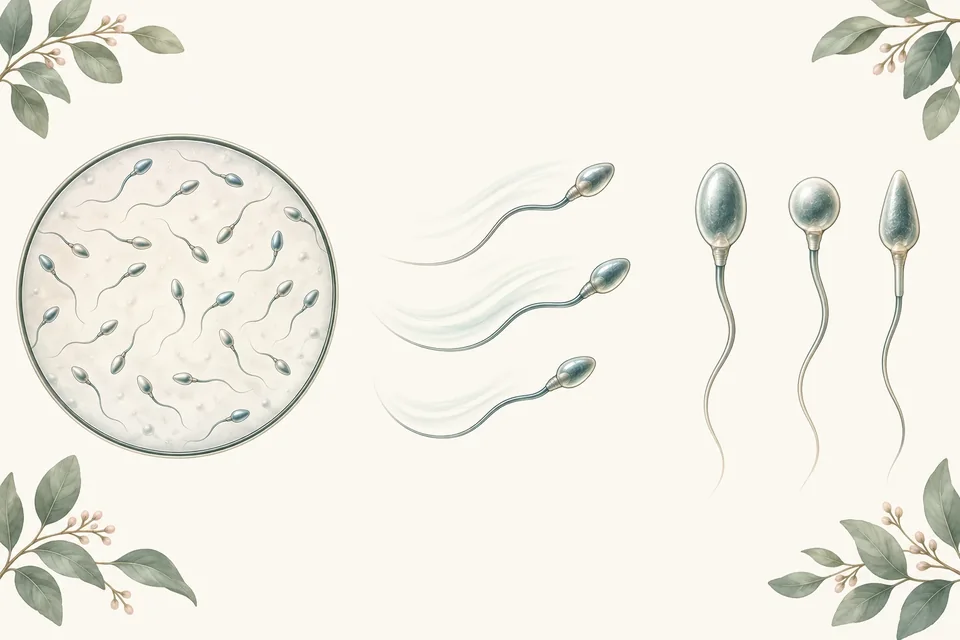
In men with abnormal semen results, some supplements have improved sperm measures: a 2025 review of 50 placebo-controlled trials found better sperm concentration with products combining three or more ingredients (and with zinc and folic acid, although the much larger FAZST trial found no change), and better sperm movement with selenium, carnitine or CoQ10. Another 2025 review found that antioxidants lowered sperm DNA damage a little. The evidence for more babies is weaker: a Cochrane review found antioxidants may increase live births, but not when only the most reliable trials were counted, and three careful randomised trials, two of antioxidant mixes and one of folic acid with zinc, found no increase. The male fertility guide shows where the guidelines disagree.
Using supplements safely

Use the dose on the label or the one your doctor advises; more is not better. Choose good-quality products: in South Africa, most supplements on sale haven’t been evaluated by SAHPRA for quality, safety or whether they work, they may only make low-risk claims, and quality and dose can vary, so be wary of any product that claims to treat infertility or guarantees results. If you could become pregnant, don’t take more than 10,000 IU (3,000 µg) a day of preformed vitamin A (retinol) from supplements, and avoid liver products: too much can harm a developing baby. Some supplements interact with other medicines, and little is known about how they combine with fertility medicines, so check with your doctor or pharmacist before you start, and tell your fertility team everything you take. If you think a supplement has caused a side effect, report it to SAHPRA through its Med Safety App. Supplements support treatment; they don’t replace it.
Myth vs evidence
“Folic acid helps you get pregnant.”
Folic acid protects your baby from neural-tube defects. It hasn’t been shown to help you conceive, but it is still important to take before you do.
“The right supplement can improve your egg quality in 90 days.”
Some supplements, such as CoQ10, have improved egg and embryo measures in trials, but none can promise results by a date, and none has yet been shown consistently to increase live births.
“Supplements make no difference, so there’s no point taking them.”
Folic acid is essential, and some supplements improve egg or sperm quality measures in trials. They work best as part of a plan agreed with your doctor, not instead of treatment.
- Am I taking the right dose of folic acid, and for how long?
- What has this supplement been shown to improve, and is there evidence for more babies?
- What dose is right for me, and how do I choose a good-quality product?
- Could this supplement interact with my medication or treatment?
Words you may hear
- Folic acid
- A form of the B vitamin folate, taken before and in early pregnancy to protect against neural-tube defects.
- Neural-tube defect
- A condition, such as spina bifida, in which the baby’s spine or brain doesn’t form properly in early pregnancy.
- Live birth rate
- The proportion of women, cycles or treatments that result in a baby being born. The outcome that matters most in fertility research.
Folic acid before pregnancy is essential. Other supplements may improve egg or sperm quality measures: ask what they have been shown to do, and use them alongside treatment, not instead of it.
Watch with Kara
Videos on this topic are coming to the channel:
- Fertility Supplements: How to Evaluate the Claims
- Folic Acid Before Pregnancy
- Questions to Ask Before You Buy a Supplement
Male fertility belongs in the same conversation. These illustrated guides pair with this topic:

Want the foundations in one place? The free Fertility Starter Guide covers ten things everyone should understand about their fertility.
Sources 14 studies and guidelines Show the research
- National Department of Health, South Africa (2024). National integrated maternal and perinatal care guidelines, 5th edition.
- Xu et al. (2018). Pretreatment with coenzyme Q10 improves ovarian response and embryo quality in low-prognosis young women with decreased ovarian reserve: a randomized controlled trial. Reproductive Biology and Endocrinology.
- Florou et al. (2020). Does coenzyme Q10 supplementation improve fertility outcomes in women undergoing assisted reproductive technology procedures? A systematic review and meta-analysis. Journal of Assisted Reproduction and Genetics.
- Zhu et al. (2023). TEAS, DHEA, CoQ10, and GH for poor ovarian response undergoing IVF-ET: a systematic review and network meta-analysis. Reproductive Biology and Endocrinology.
- Fitz et al. (2024). Inositol for polycystic ovary syndrome: a systematic review and meta-analysis to inform the 2023 update of the international evidence-based PCOS guidelines. Journal of Clinical Endocrinology and Metabolism.
- Zhou et al. (2022). Effect of vitamin D supplementation on in vitro fertilization outcomes: a trial sequential meta-analysis of 5 randomized controlled trials. Frontiers in Endocrinology.
- Michaelsen et al. (2025). The effect of dietary supplements on male infertility in terms of pregnancy, live birth, and sperm parameters: a systematic review and meta-analysis. Nutrients.
- Szabó et al. (2025). Assessing the efficacy of varicocelectomy, antioxidants, FSH treatment, and lifestyle modifications on sperm DNA fragmentation: a systematic review and meta-analysis. Scientific Reports.
- de Ligny et al. (2022). Antioxidants for male subfertility. Cochrane Database of Systematic Reviews.
- Schisterman et al. (2020). Folic acid and zinc supplementation in men and live birth (FAZST trial). JAMA.
- Steiner et al. (2020). Antioxidants for male factor infertility (MOXI trial). Fertility and Sterility.
- ESHRE Add-ons working group (2023). Good practice recommendations on add-ons in reproductive medicine. Human Reproduction.
- South African Health Products Regulatory Authority. Complementary medicines.
- NIH Office of Dietary Supplements. Vitamin A and carotenoids: fact sheet for health professionals (updated 10 March 2025).